
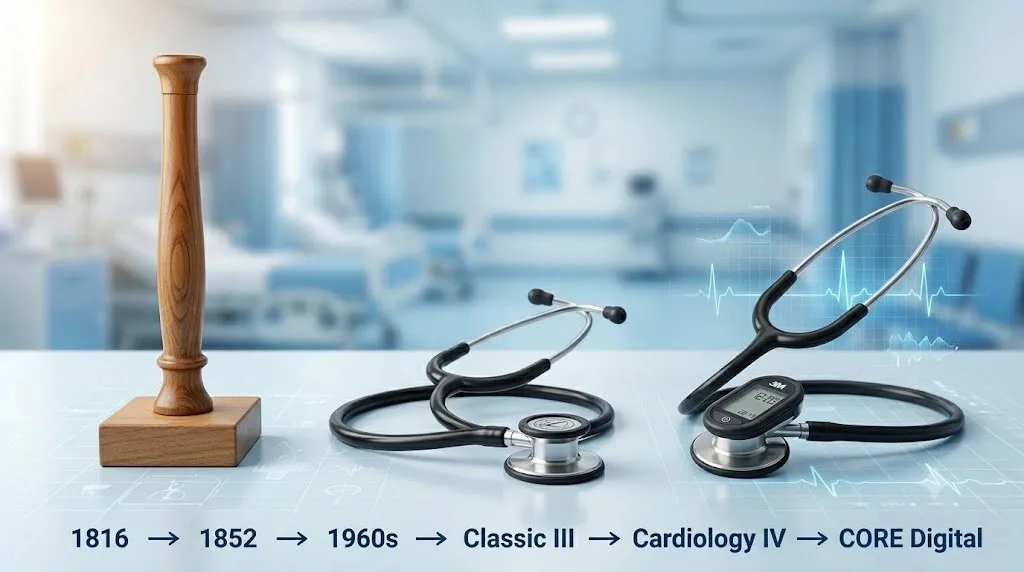
The Evolution of the Stethoscope: From René Laennec to the Latest Littmann Models
The stethoscope is one of the most recognizable symbols of the medical profession. Whether you visit a hospital, clinic, pharmacy, or even keep a first aid kit at home, you’ve likely seen one. Doctors, nurses, medical students, paramedics, and healthcare professionals rely on it every day to assess heart sounds, lung function, blood pressure, and many other vital signs.
But the modern stethoscope that we know today didn’t appear overnight. It is the result of more than 200 years of innovation, engineering, and medical research. Let’s take a journey through its fascinating history and see how it evolved into the world-famous Littmann stethoscope.
The First Major Improvement
Although René Laennec’s original wooden stethoscope (invented in 1816) was revolutionary, it wasn’t perfect. Since it was a rigid wooden tube, doctors had to lean very close to the patient, making examinations uncomfortable for both physicians and patients.
As medicine progressed during the 1830s and 1840s, physicians started experimenting with flexible materials. Dr. John B. Williams and several other European physicians introduced flexible tubing to improve patient comfort and facilitate examinations. Around the same time, British physician Golding Bird also contributed to improving the design, helping make stethoscopes more practical for everyday clinical use.
These early improvements marked the beginning of the flexible stethoscope that would eventually replace Laennec’s original wooden design.
The Birth of the Binaural Stethoscope
One of the biggest breakthroughs came in 1851, when Irish physician Arthur Leared introduced the binaural stethoscope—a design that allowed doctors to listen with both ears rather than one.
Just a year later, in 1852, American physician George Philip Cammann refined this design and created the first commercially successful binaural stethoscope. His design significantly improved sound quality, comfort, and ease of use, making it the new standard in hospitals. Interestingly, the overall structure of modern stethoscopes still follows Cammann’s design.
Improvements Throughout the 20th Century
During the early 1900s, manufacturers focused on making stethoscopes lighter, stronger, and more comfortable. Several important improvements were introduced:
- Better-quality rubber tubing for improved sound transmission.
- Lightweight metal chest pieces.
- Softer ear tips for longer use.
- Improved diaphragms for clearer sound.
- Dual-head chest pieces with both a diaphragm and bell.
These upgrades allowed healthcare professionals to hear subtle heart murmurs, lung sounds, and bowel sounds much more clearly than ever before. As cardiology and pulmonology advanced, physicians demanded even greater acoustic performance, paving the way for another major innovation.
The Littmann Revolution
No discussion about stethoscopes is complete without mentioning Dr. David Littmann. A Harvard Medical School professor and renowned cardiologist, Dr. Littmann, believed that existing stethoscopes failed to deliver the sound clarity physicians needed.
In the early 1960s, he designed a completely new stethoscope that was lighter, more ergonomic, and provided dramatically improved acoustics. His innovative design quickly gained popularity among healthcare professionals across the United States.
In 1967, the 3M Company acquired Dr. Littmann’s patents and began manufacturing the famous 3M Littmann Stethoscope. Since then, Littmann has become the gold standard for healthcare professionals worldwide.
Why Littmann Became the Industry Standard
Littmann stethoscopes became popular because they offered unique medical advantages:
- Exceptional acoustic sensitivity & Tunable diaphragm technology
- Lightweight construction with a comfortable fit
- Durable tubing with a longer lifespan
- Excellent performance for advanced cardiology and critical care
Today, millions of doctors, nurses, and medical students trust Littmann because of its reliability and consistent performance.
Evolution of Littmann Stethoscopes
1. Littmann Lightweight II S.E.
This model was created primarily for nurses, medical assistants, and nursing students. It is lightweight, affordable, and ideal for routine patient assessments and blood pressure checks.
2. Littmann Classic II
The Classic II became one of the most widely used stethoscopes in medical schools for decades because of its excellent balance between price and performance.
3. Littmann Classic III (The Best Seller)
The Littmann Classic III is currently one of the best-selling stethoscopes worldwide. Its features include a dual-sided chest piece, tunable diaphragms on both sides, improved tubing durability, and suitability for both adult and pediatric patients.
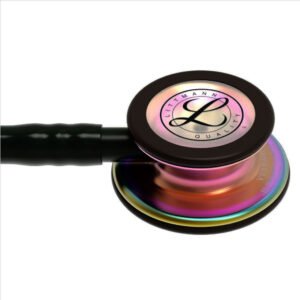
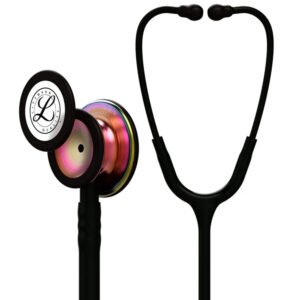
Littmann Classic III Stethoscope Rainbow Black 5870
Original price was: ₨43,900.00.₨41,900.00Current price is: ₨41,900.00.4. Littmann Cardiology IV
Designed for specialists, the Cardiology IV provides the highest acoustic sensitivity. Its thicker dual-lumen tubing helps block external ambient noise, allowing physicians to hear even the faintest heart murmurs.
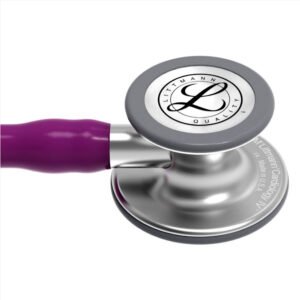
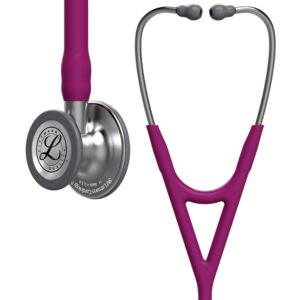
- Recommended For: Cardiologists, Emergency Physicians, ICU Doctors, and Pulmonologists.
- Check the live price of Littmann Cardiology IV at Family Care
5. Littmann CORE Digital Stethoscope
One of Littmann’s biggest innovations is the launch of the Littmann CORE Digital Stethoscope. This advanced model combines traditional analog auscultation with digital technology. It features up to 40× sound amplification, active noise cancellation, Bluetooth connectivity, and waveform visualization via the Eko mobile app.

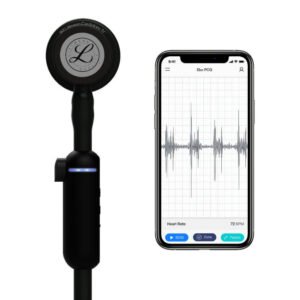
Littmann CORE Digital Stethoscope All Black 8480
Original price was: ₨198,000.00.₨174,900.00Current price is: ₨174,900.00.Which Littmann Models Are Currently Available in 2026?
As of 2026, these are the most popular Littmann models active in the global market:
- Littmann Lightweight II S.E.
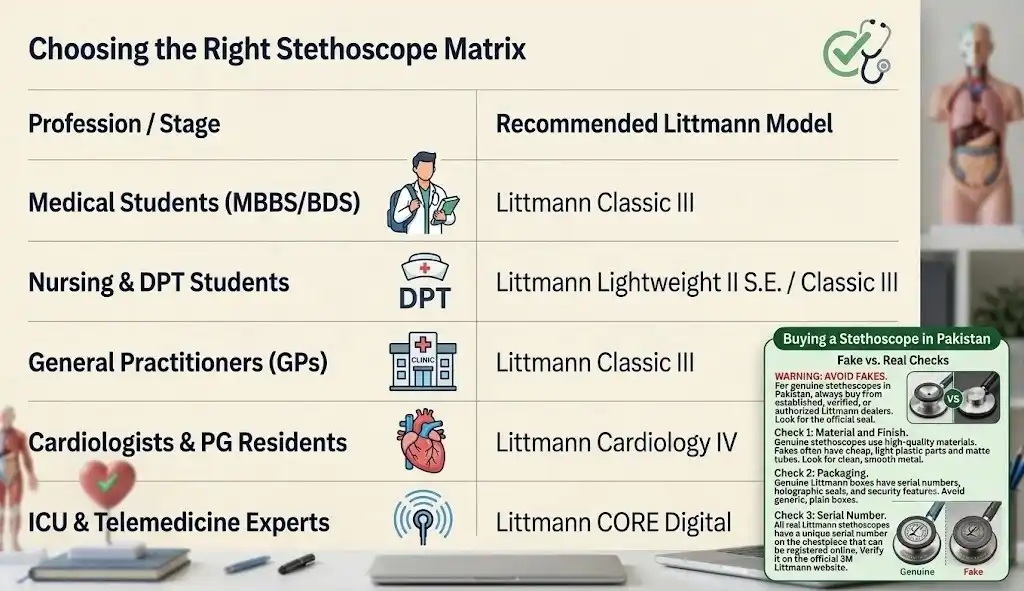
- Littmann Classic III (Best choice for medical students)
- Littmann Cardiology IV (Preferred by experienced specialists)
- Littmann CORE Digital
Is a New Littmann Model Coming Soon?
This is one of the most common questions among healthcare professionals. At the moment, 3M has not officially announced a direct successor to the Classic III or Cardiology IV. However, industry experts expect that future models will focus more heavily on digital healthcare technologies, AI-assisted heart sound analysis, smarter wireless integration with electronic medical records (EMR), and enhanced battery life.
Choosing the Right Stethoscope Matrix
Final Thoughts
From René Laennec’s simple wooden tube in 1816 to today’s advanced digital Littmann stethoscopes, the evolution of this iconic medical instrument reflects more than two centuries of innovation. Investing in a high-quality stethoscope not only improves your diagnostic accuracy but also provides years of reliable performance throughout your professional career.
Buy Littmann Stethoscopes from Family Care
Looking for an original Littmann stethoscope in Pakistan? At Family Care, you’ll find genuine 3M Littmann models with verifiable serial numbers, competitive pricing, and trusted customer support. Don’t risk your clinical education with cheap replica copies.
Browse our complete, authentic Littmann Collection at Family Care Today and choose the perfect diagnostic companion for your medical journey!



Add comment